Where's My Car? A Realistic Guide to Shipment Tracking
The most common call we get at our Phoenix office between day 3 and day 7 of a shipment is some version of "Where's my car right now?" And the honest answer is: tracking a vehicle on a carrier truck doesn't work like tracking a FedEx package. This guide covers what tracking actually looks like in auto transport, how often you should realistically expect updates, and the signals that tell you something's genuinely off.
Ship Your Car Today
Get a quote or talk to our team right now

The 3 Tracking Systems Carriers Actually Use
Auto transport tracking falls into three categories, and the one your carrier uses depends on their fleet size and tech investment. Understanding which system you're getting upfront saves a lot of frustration once your car is on the road.
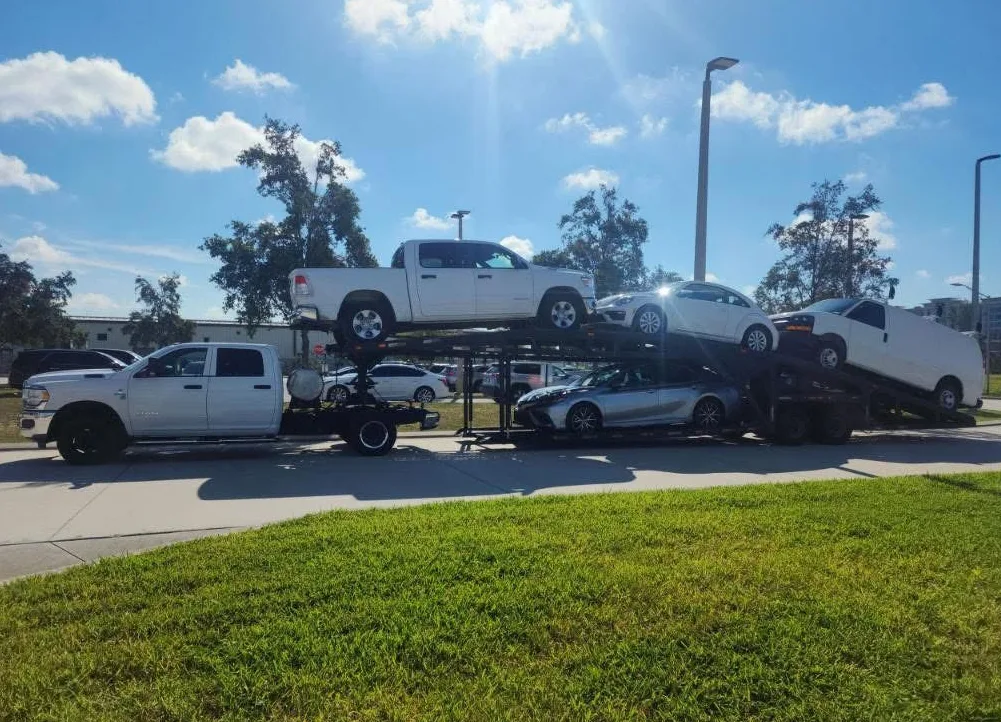
Commercial GPS systems like Samsara, KeepTruckin, and Omnitracs ping the truck's location every 2-4 hours while the rig is rolling. The data feeds into a dispatch dashboard that your broker can access to give you position updates. The key detail here is that the GPS unit sits on the truck, not on your individual car. So you're tracking the vehicle carrying your vehicle, not your car itself.
Driver check-in tracking is the most common method for independent owner-operators. The driver calls or texts dispatch with a location update once or twice a day, and dispatch relays that info to you. Updates are less precise (you get "just passed through Albuquerque" instead of exact coordinates), but the upside is that the driver can also report on weather ahead, mechanical condition of the rig, and estimated arrival windows.
Milestone-only tracking is the most basic system: you get a notification when your car is loaded, when the truck departs, and when it's 12-24 hours from delivery. There's nothing wrong with this method if the communication is reliable, but the gaps between milestones can feel long, especially on a 10-day cross-country haul.
How Often You'll Actually Hear From Us (And What's Normal)
Set your expectations at one update every 24-48 hours during active transit. That's the industry standard, and any company promising you minute-by-minute GPS pings is overselling what the technology delivers in this business. Hourly tracking works for Amazon packages. Car carriers hauling 8-10 vehicles down I-40 operate on a different rhythm.
Our dispatch team in Phoenix sends status updates each business day by late morning. You'll also get immediate notifications at four key moments: when the carrier is assigned, when your car is loaded, when the truck is within 200 miles of your delivery address, and when the driver calls to schedule the drop-off window. If something goes sideways between those touchpoints (weather delay, mechanical issue, route change), we call you directly rather than waiting for the next scheduled update.
Weekends and holidays slow things down on the communication side, though the trucks keep rolling. Expect a 48-hour gap between updates on holiday weekends. If 72 hours pass without any word from anyone, that's your signal to pick up the phone and call us at (602) 860-6894.
Door-to-Door Car Shipping tends to involve more frequent back-and-forth because the driver needs to coordinate street-level logistics at both ends. You'll usually get an extra update or two compared to terminal-to-terminal service, where the car sits at a yard until you come get it.
What You Can (and Can't) See During Transit
A typical tracking update tells you four things: the truck's approximate location (nearest city or highway corridor), the vehicle's current status (loaded, in transit, approaching delivery zone), an estimated delivery window, and whether any delays have been flagged. That's solid, useful information, but it's not Google Maps following a blue dot in real time.
Location data gets reported at the city or interstate-exit level, not the street level. When dispatch tells you "the truck passed through Oklahoma City on I-40 heading east," that's about as precise as it gets. Carriers don't share exact GPS coordinates for security reasons, and frankly, the granularity wouldn't mean much to you anyway. Knowing your car is in central Texas versus central Oklahoma is the actionable detail.
Status milestones you should expect: vehicle inspected and loaded at origin, truck departed, crossed into a new state or region, approaching delivery area, driver scheduling delivery appointment. Each milestone should come with a revised ETA so you can plan your end of the handoff.
Some carriers take loading and unloading photos, especially for Inoperable Vehicle Transport and high-value shipments where documentation is critical. But don't count on getting scenic photos from every fuel stop along the way. Drivers are focused on safely strapping down vehicles and meeting their schedule, not curating your shipment's Instagram feed.
What Separates Good Tracking From Great Communication
The companies that handle tracking best aren't necessarily the ones with the fanciest app. They're the ones where a human being picks up the phone when you call and gives you a straight answer. Technology is a tool, but proactive communication is the actual service.
Large national brokers often have customer portals with map views and automated status pings. That's convenient if everything goes smoothly. But when a snowstorm delays your truck in Amarillo, an automated "delay detected" notification doesn't tell you whether you're looking at 4 hours or 4 days. You need someone who can call the driver, get the real story, and relay it to you in plain language.
That's our approach at National Auto Transport. We pull GPS data from our carrier partners' fleet management systems, but we also maintain direct phone lines with every driver hauling our customers' vehicles. When tracking data says the truck hasn't moved in 12 hours, we're already on the phone finding out why before you have to ask.
Some owner-operator carriers skip the tech entirely and just give you the driver's cell number. There's nothing wrong with that. Direct contact with the person driving the truck is actually the most transparent form of tracking there is. The trade-off is that it's less formal and there's no data trail if you need to reference something later for a claim or complaint.
5 Red Flags That Mean Something's Wrong With Your Shipment
Radio silence for 72 hours or longer is the biggest red flag. A 24-48 hour gap between updates is normal. Three full days with zero contact from your broker or driver is not. It usually means one of two things: your broker has lost track of the carrier, or the carrier has gone dark on everyone, which is a much worse scenario.
Vague answers like "it's on the way" or "making progress through the Southwest" without specific cities or highways mean the person you're talking to doesn't actually know where the truck is. Legitimate dispatchers can tell you the last reported location within a few hours of accuracy. If they can't, they're either disorganized or hiding something.
Refusal to share driver contact information after your car is loaded is a yellow flag. Some brokers hold back driver info during the dispatch phase, and that's fine. But once your vehicle is physically on the trailer, you should be able to reach the driver if needed. A broker who says "we don't provide that" after pickup may not have a strong relationship with the carrier they assigned.
Tracking that shows zero movement for 3+ days without a weather or mechanical explanation deserves immediate escalation. Your car could be sitting at a terminal waiting for a trailer swap, or the carrier could have deprioritized your load. Contact your broker, demand a specific status, and if you don't get a satisfactory answer within 24 hours, start documenting everything for a potential FMCSA complaint. Shipping in Long Beach and other high-volume corridors occasionally see these bottlenecks during peak season.

How Tracking Differs Between Open, Enclosed, and Expedited
Open carrier shipments follow the most predictable tracking pattern because these trucks stick to major interstates and run well-established routes. You'll get clean, linear updates: loaded in Phoenix, passed through El Paso, crossed into Louisiana, approaching Atlanta. The straightforward routing makes ETAs more accurate on open haulers.
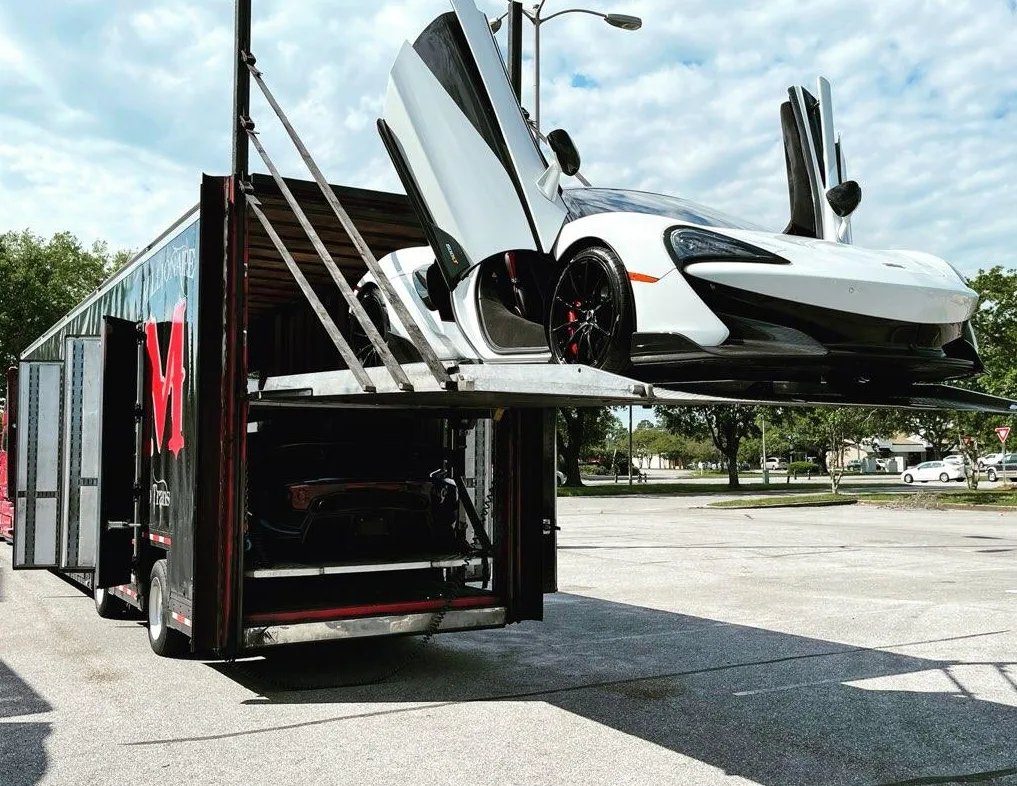
Enclosed transport tracking includes the same location data but with an extra layer of detail around security and handling. Enclosed drivers tend to check in more frequently because they're hauling $500,000+ worth of vehicles and their dispatchers want tighter oversight. You might also get loading and unloading photos since high-value car owners expect thorough documentation.
Motorcycle Shipping is a different animal. Bikes often share trailer space with other motorcycles or small vehicles, so the carrier's route is optimized around multiple drop-off points in the same region. Your tracking might show the truck arriving in your metro area a day before your actual delivery because the driver is completing other stops first.
Expedited shipments get the most attentive tracking because you're paying for speed and accountability. Expect updates every 12-24 hours, direct driver phone access from day one, and priority escalation if anything causes a delay. The premium you're paying (30-50% above standard) buys you communication as much as it buys you faster transit.

Your Car Is Delayed. Here's What to Do Next.
First, take a breath. Not every delay means something is wrong. Carrier trucks cover 500-700 miles per day, and dozens of variables affect timing: traffic, mandatory rest stops, weather detours, and other customers' pickups and deliveries along the route. A 1-2 day variance from your original ETA is within normal range.
Weather delays are the most common and the least concerning. If your tracking shows the truck parked in Amarillo while a blizzard blows through the Texas Panhandle, that driver is doing the right thing. Never pressure a carrier to drive through dangerous conditions. Your car can wait an extra day. A jackknifed carrier truck on an icy highway cannot be undone.
Mechanical breakdowns are more serious. If the truck breaks down, your broker should be lining up a replacement carrier or arranging a transfer within 24-48 hours. Ask specifically: "Is my car being transferred to another truck, and when?" A broker who can't answer that question within a business day is either disorganized or doesn't have a backup plan. This is where working with a company like ours that has a deep carrier network pays off.
Unexplained silence requires escalation. Call your broker. If they don't answer or give vague responses, send a written follow-up by email (creating a paper trail). If you still have no answers after 48 hours, request direct driver contact, and if that's refused, start documenting everything for a potential FMCSA complaint.
Keep a log of every communication: dates, times, who you spoke with, and what they said. Screenshot any tracking data you can access. This documentation is critical if you end up filing an insurance claim or formal complaint down the line.
How to Get More (and Better) Updates on Your Shipment
The single biggest thing you can do is make yourself easy to reach. Give your broker your cell number, a backup number, and your email. Reply to texts and calls quickly. A shocking number of delivery delays happen not because the truck is late, but because the driver called three times to schedule drop-off and nobody picked up.
During the booking call, ask these four questions: "How often will I get updates? Will I have the driver's phone number after pickup? How do you notify me about delays? Do you offer text updates?" Any professional operation will give you clear, specific answers. Hesitation or vague responses on these basic questions tells you a lot about how communication will go once your car is on the road.
Be upfront about your expectations. If you're someone who needs daily check-ins to feel comfortable, say so when you book. If you're fine with milestone-only updates and don't want to be bothered unless something goes wrong, tell us that too. Matching your communication preferences with the right service level avoids friction on both sides.
If you're shipping from New Haven or another Northeast city during peak season, build in extra patience. High demand in June-August means dispatchers are juggling more loads, and update frequency sometimes drops to every 36-48 hours instead of daily. That's a volume issue, not a service quality issue.
For time-critical or high-value shipments, ask about expedited or premium service tiers. The extra cost (usually 20-40% above standard) buys you a dedicated point of contact, priority status in the dispatch queue, and significantly more frequent updates. If your $120,000 Porsche is crossing the country, that peace of mind is well worth the investment.
Tracking Methods Compared: Pros and Cons
| Method | How Often | What You Get | Works Best When |
|---|---|---|---|
| Commercial GPS | Every 2-4 hours | Truck coordinates, ETA revisions | You want passive, data-driven updates |
| Driver Check-ins | Once or twice daily | Location + context (weather, delays) | You value detail over precision |
| Milestone Only | 3-4 times total | Loaded, in transit, near delivery | You're relaxed and don't need constant info |
| Broker Portal/App | Daily with auto-alerts | Map view, notifications, history log | You prefer self-service status checks |
| Direct Driver Phone | Whenever you call | Live info from the person driving | High-value or time-sensitive loads |
Your car isn't a pizza delivery. It's riding on a truck with 7-9 other vehicles, covering 500+ miles a day across multiple states. One solid update every 24 hours with a revised ETA is more useful than a blinking dot on a map refreshing every 10 minutes. Judge a company by the quality and reliability of their communication, not the flashiness of their tracking page.
What to Remember About Shipment Tracking
Vehicle Tracking FAQ
The tracking and communication questions our Phoenix team answers most often.