How to Prepare Your Car for Shipping the Right Way
Most problems on pickup day are 100% preventable. Our Phoenix team has prepped and shipped 47,000+ vehicles since 2018, and we've narrowed the prep process down to a handful of steps that take about 20 minutes. Do these before the truck arrives and your car will load, ride, and deliver without a hitch.
Ship Your Car Today
Get a quote or talk to our team right now

What to Handle 2 to 3 Weeks Before Your Pickup Date
Start by taking stock of anything attached to your car that isn't factory-original. Roof racks, bike carriers, spoilers, external antennas, hitch-mounted accessories. All of it needs to come off. Standard carrier insurance doesn't cover aftermarket add-ons, and we've processed claims where a $1,800 Thule rack got bent because it wasn't removed. That's an expensive lesson.
Pull together your vehicle's service records and registration paperwork. If something goes wrong during loading, like a starter that won't engage, having the maintenance history on hand tells the driver exactly what they're working with. A customer last year had a 2020 Subaru Outback that wouldn't shift out of park on pickup day. Because she had the service records showing a known shift-lock issue, the driver knew exactly how to override it and saved two hours of delay.
This is also the time to start your photo documentation. Walk around the entire car with your phone and take clear, well-lit photos from every angle. Get close-ups of any existing door dings, scratches, chips, or curb rash on the wheels. Turn on timestamps in your camera app. These photos are your proof if a dispute comes up after delivery.
Why a Clean Car Matters More Than You Think
This isn't about being neat. A clean car is critical for the pre-transport inspection. If there's dirt, mud, or road salt caked onto the paint, the driver can't tell the difference between an old scratch and a new one. That creates problems later if you need to file a damage claim.
Give your car a thorough wash 2 to 3 days before the scheduled pickup. Don't just run it through an automatic car wash. Hand wash it so you can spot any existing damage yourself. A coat of wax is smart too, especially for open transport where road grit and bug splatter can build up during a 2,000-mile trip. Military Auto Shipping routes that cross from the desert into humid climates make this even more important.
Don't forget the undercarriage, wheel wells, and door jambs. Carriers look at the whole car during inspection, and a clean vehicle signals that you've done your due diligence. It also helps the driver load your car safely since they can see exactly where to position tie-down straps without guessing what's under a layer of grime.
What Can You Leave in Your Car During Shipping?
The official answer is nothing. The realistic answer is that most carriers will tolerate a small amount of stuff in the trunk, but it comes with a big caveat: none of it is covered by the carrier's insurance. Not one item. If your laptop, toolbox, or winter coat gets damaged or goes missing, there's no claim to file.
If you do pack anything, keep it under 100 pounds total and stick to the trunk only. Soft, non-breakable items like clothing or bedding are the safest bet. Nothing liquid, nothing flammable, nothing you'd be upset about losing. We had a customer last year pack a trunk full of dishes wrapped in towels. Half of them were broken on arrival, and we couldn't do a thing about it.
The passenger cabin needs to be completely cleared out. Glove box, center console, door pockets, sun visor clips, seatback organizers, charging cables. Everything comes out. Loose items bounce around during transit and can scratch your dash, crack your windshield, or lodge under the brake pedal. A driver noticed a water bottle jammed under the brake of a customer's Accord last year during unloading. That's a safety issue nobody needs.
The Right Amount of Gas to Have in Your Tank
Keep it at a quarter tank or below. Every carrier we work with has this rule, and it's not arbitrary. A full tank on a midsize sedan adds about 130 to 170 pounds. Stack 9 vehicles on a trailer with full tanks and you've added over a ton of unnecessary weight, which puts the carrier dangerously close to federal weight limits.
There's a mechanical reason too. Gasoline sloshes around during transport in ways your fuel system wasn't built to handle for days at a time. The constant movement can put stress on fuel pumps, seals, and evaporative emission components. We've processed repair claims from customers who shipped with full tanks on cross-country runs from New Orleans out to the West Coast. That's 3 to 5 days of constant fuel movement.
Top off to about 1/8 to 1/4 tank the day before your pickup window opens. That's enough gas for the driver to start the engine, drive your car on and off the trailer at both ends, and handle any short repositioning moves. Don't let it get below the E line, though. Running dry during unloading causes its own set of headaches.
Mechanical and Fluid Checks Before Your Car Ships
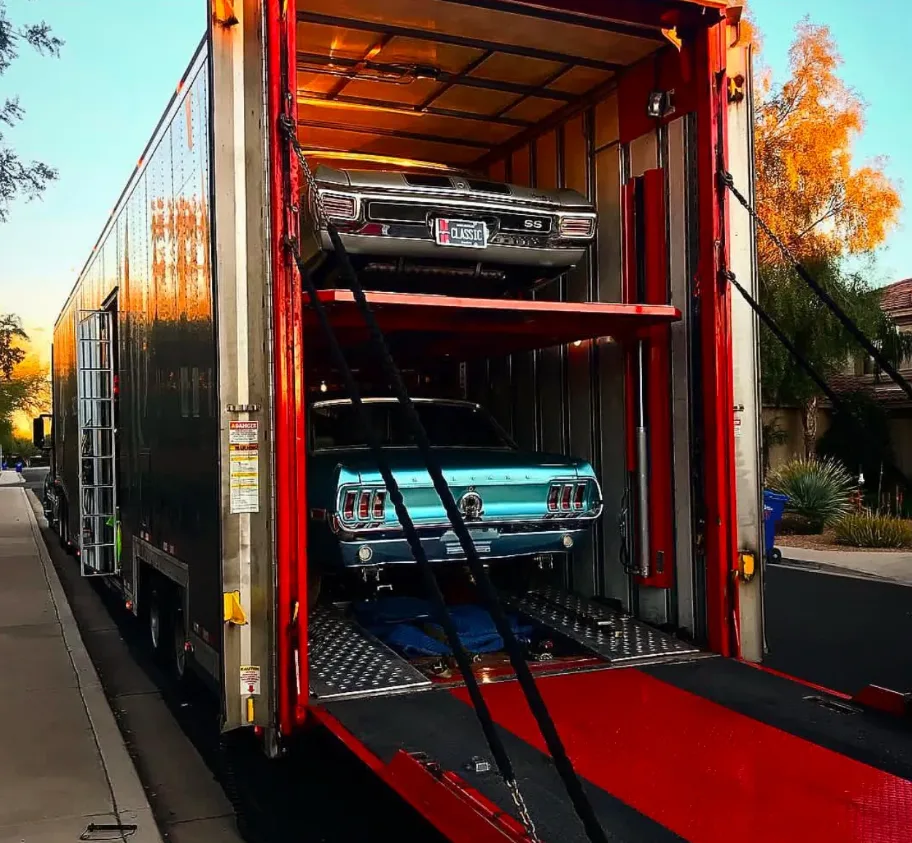
Your vehicle needs to do three things reliably on pickup day: start, steer, and stop. If it can't do all three, it's classified as inoperable and you'll pay an extra $175 to $350 for winch loading. So before the truck arrives, turn the car on, check that the steering feels normal, and test the brakes in your driveway.
Pop the hood and check your fluid levels. Brake fluid is the most important one. Low brake fluid means soft or spongy pedals, and drivers won't load a car they can't stop. Top off power steering, coolant, and windshield washer while you're at it. If you notice any leaks under the car where you park, get those fixed before shipping day. Oil or transmission fluid dripping onto a vehicle parked below yours on the trailer is a damage claim that falls on you.
Battery health is another big one. Have your battery tested at any auto parts store for free. If it's marginal, replace it now. We've had drivers show up to a pickup only to find a dead battery, which means either a $125 jump-start fee on the spot or a rescheduled pickup that delays the whole process. A $150 battery now prevents a much more expensive problem later.
Tire Pressure, Wheels, and What to Watch For
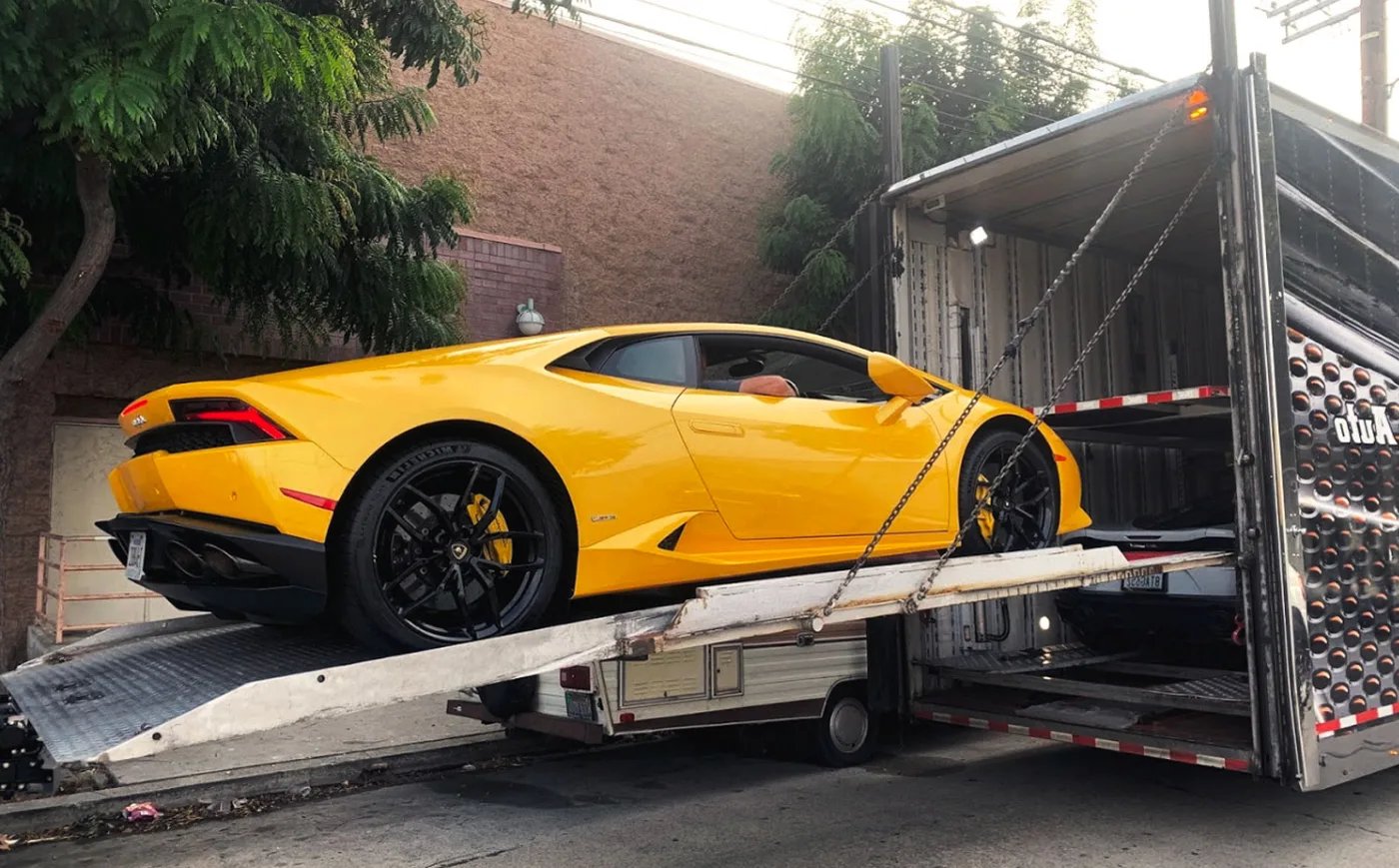
Check every tire before your car ships. Find the recommended PSI on the sticker inside your driver's door jamb and inflate to that number. Under-inflated tires can develop flat spots sitting on a trailer for a week, and they make loading trickier because the car doesn't roll smoothly up the ramp. Over-inflated tires are just as bad since they're more likely to pop from road vibration.
If you're running expensive aftermarket wheels, think about swapping them for a set of stockers before shipping. Carrier insurance covers factory wheels, but a set of $4,000 custom BBS rims? That's typically not included. Some of our collector car customers keep a spare set of cheap takeoff wheels specifically for transport. It's a little extra hassle, but it beats worrying about curb damage on irreplaceable wheels.
Inspect the sidewalls for cracks, bulges, or cuts. Any tire that's compromised could blow during loading or while sitting on the carrier. Auction Vehicle Shipping customers should pay extra attention here since auction cars often sit on lots for weeks with tires going flat or developing dry rot. A bad tire that blows during unloading creates problems for everyone.
Alarms, Convertibles, and Features That Need Attention
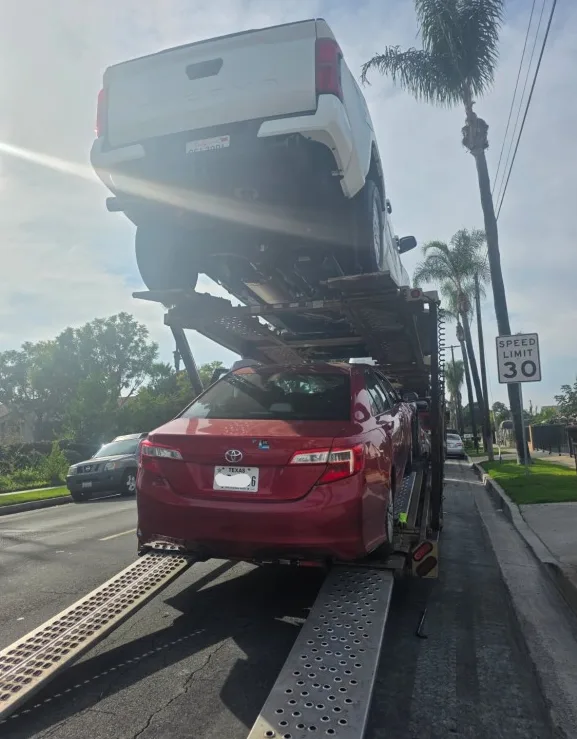
Turn off your alarm system completely. We're not talking about just locking the car. You need to deactivate the alarm so it won't trigger from vibration, tilt, or proximity sensors while riding on a trailer. If your system doesn't have a disable mode, pull the alarm fuse. A Viper or Compustar aftermarket system going off at 3 AM in a truck stop is a real problem that's happened more than once.
Got a convertible? Put the top up and make sure it's latched tight. Weather changes fast on cross-country routes, and a sudden rainstorm in Kansas will soak your interior if the top isn't secured. Retractable antennas should be fully down. Power antennas that stick up can snag on low bridge clearances or parking garage entrances when the carrier is navigating tight spaces.
If your vehicle has a remote start app on your phone (like FordPass, myChevrolet, or Tesla's app), disable it. A car that randomly fires up on a trailer is a serious safety hazard. Same goes for aftermarket remote start systems. And when you hand keys to the driver, give them one key only. Don't hand over your full keychain with house keys, office fobs, and garage remotes attached.
Your Final Walkthrough on Pickup Day
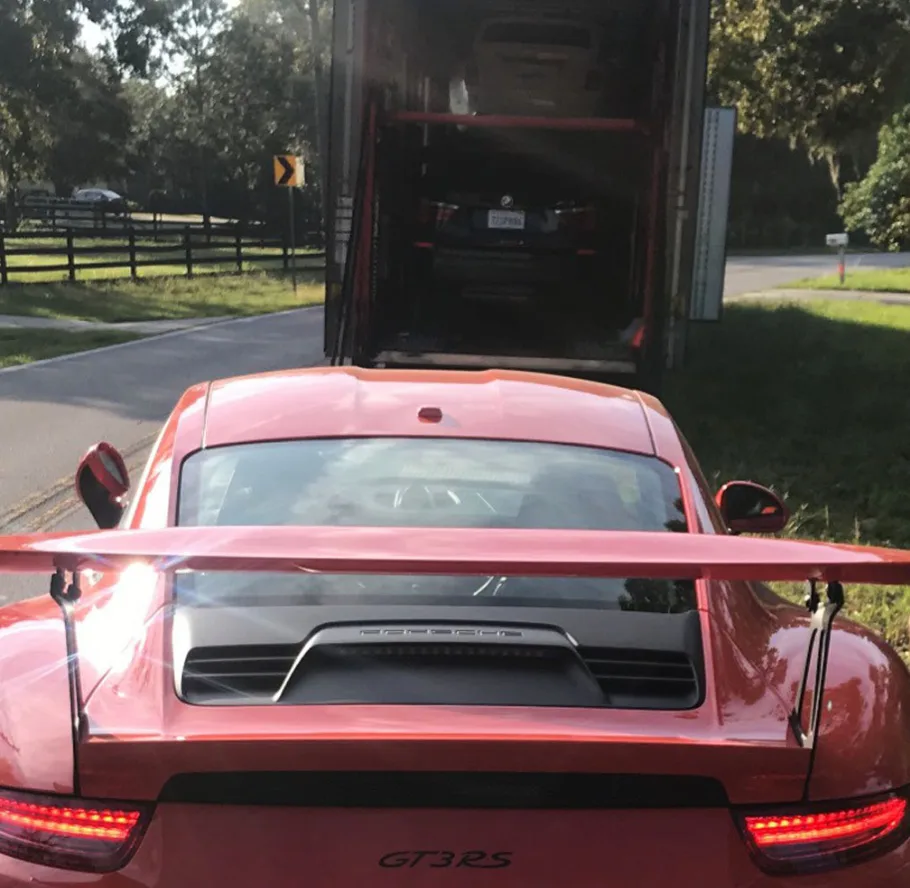
When the driver arrives, do one last walk-around and record a video on your phone. Video captures more than photos because you can narrate what you're seeing ("small scratch on rear bumper, left side") and show depth and angles. Walk slowly around the entire car, and don't skip the roof, hood, and trunk lid.
The driver will fill out a Bill of Lading (BOL) with the car's condition noted. Read it carefully before you sign. Every mark, ding, and scratch should be documented. If you see something on your car that isn't listed on the BOL, speak up before you sign. Once you put your name on that paper, it's much harder to dispute later. Corporate Relocation Vehicle Shipping customers sometimes rush this step because they're juggling a dozen things on moving day. Don't.
Double-check that your phone number is correct in our system and with the carrier. If you're in the middle of a move and your phone dies or your number changes, delivery gets complicated fast. If someone else will receive the car on the other end, make sure they have a copy of your written authorization, a photo ID, and the ability to pay the remaining balance. Drivers can't release vehicles to unauthorized people, no matter what.
Prep Requirements: Open vs Enclosed Shipping
| Prep Task | Open Carrier | Enclosed Carrier | Reason |
|---|---|---|---|
| Full Wash | Must do, hand wash best | Must do, hand wash best | Enables accurate condition report |
| Gas Tank | 1/8 to 1/4 tank | 1/8 to 1/4 tank | Federal weight limits and fuel slosh |
| Belongings | Trunk only, under 100 lbs | Better to remove all | Zero insurance on personal items |
| Alarm/Remote Start | Fully disabled or fuse pulled | Fully disabled or fuse pulled | Avoids false triggers on trailer |
| Leak Repairs | No leaks allowed | No leaks allowed | Drips damage cars positioned below |
| Aftermarket Parts | Remove or accept the risk | Safer but still not insured | Not covered under standard policy |
| Tire PSI | Set to door jamb spec | Set to door jamb spec | Smooth loading and flat spot prevention |
| Battery Health | Must hold charge and start | Must hold charge and start | Driver needs to move car on and off |
The biggest mistake we see is customers who don't document their car before pickup. A 5-minute video walk-around with narration is the single best thing you can do to protect yourself. If something happens during transit, that footage is your proof. Without it, you're relying on memory, and that won't hold up in a claim.
Key Takeaways
Car Shipping Prep FAQs
Answers from our team based on 47,000+ vehicles prepped and shipped since 2018.