Shipping a Car to College: Pricing, Timing, and What Parents Need to Know
About 19.4 million students are enrolled in U.S. colleges right now, and a big chunk of them need a vehicle on or near campus. If your kid is heading out of state, here's what it actually costs to ship their car, how long it takes, and where the process trips up most families.
Ship Your Car Today
Get a quote or talk to our team right now

The Best Time to Book College Car Shipping (and When You'll Overpay)
Target a delivery date 10-14 days before move-in day for fall semester, or about a week before the spring term starts. That gives you enough padding in case weather or carrier scheduling pushes the arrival back a few days. You don't want your student stranded without wheels during the first week of classes.
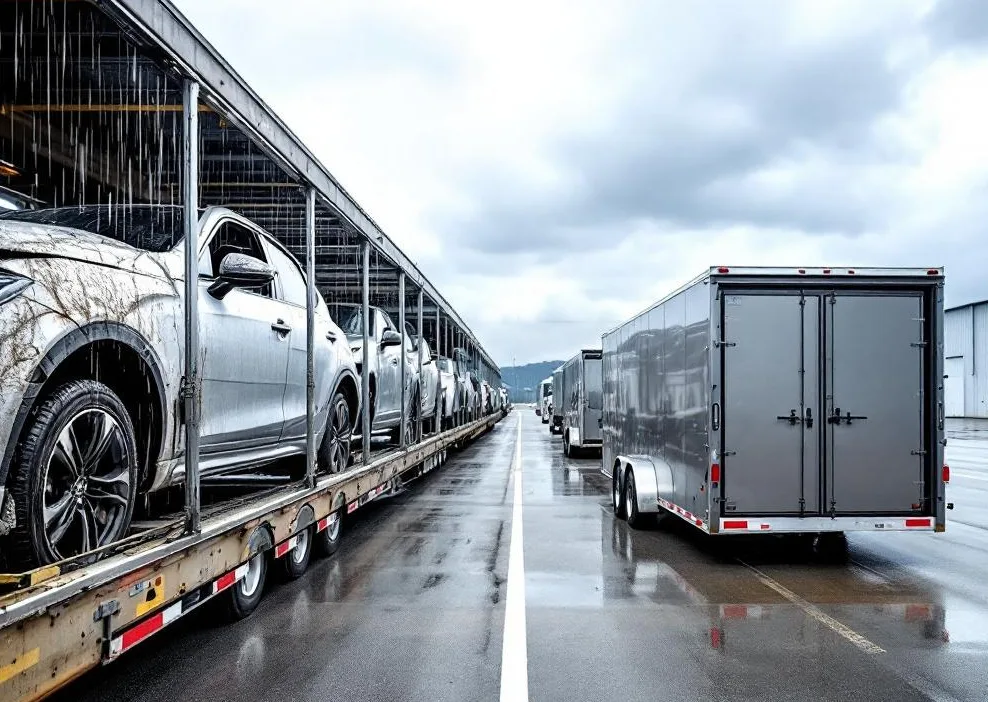
August and January are the two worst months for car shipping rates, period. Carrier capacity gets eaten up fast because hundreds of thousands of families are trying to move vehicles at the same time. We see rates climb 25-35% above what you'd pay in a normal month. It happens every single year like clockwork.
Parents who book in early July for a late-August delivery routinely save $250-$450 versus those who call the second week of August. A family from suburban Dallas called us last summer on August 12th needing a car at UT Austin by August 22nd. Every open carrier was spoken for. They ended up paying $1,740 for expedited service on a route that normally costs $680-$820.
Our recommendation: lock in your spot 4-5 weeks out during normal months, and 6-8 weeks out for any move that falls in August, January, or May.

What You'll Pay to Ship a Car to Campus (Real Numbers)
On an open carrier, college car shipping breaks down roughly like this: under 500 miles costs $550-$850, distances from 500 to 1,200 miles land between $800-$1,250, and anything over 1,200 miles runs $1,100-$1,750. Those figures assume you're booking during a normal month, not peak season.
A 600-mile run from Phoenix to Flagstaff or Tucson to San Diego sits around $620-$780. A 1,400-mile haul from suburban Chicago to the University of Florida in Gainesville averages $1,050-$1,350. Coast-to-coast routes like New Jersey to UCLA push $1,400-$1,750 because there are simply more miles for the carrier to cover.
Seasonal pricing catches parents off guard every year. A route quoted at $840 in mid-July can jump to $1,150 by the last week of August. It's purely a supply-and-demand issue. Carriers can only haul 8-10 cars at a time, and everybody wants those same two weeks.
Open transport covers the vast majority of college cars. A 2020 Honda Civic, a Kia Soul, a Jeep Wrangler - none of these need an enclosed trailer. Reserve that upgrade for vehicles worth $45,000+ or classic cars your student shouldn't be driving to campus in the first place.
Door-to-Door, Terminal, or Drive It? Picking the Right Method
Cross Country Car Shipping on an open carrier is what we set up for roughly 9 out of 10 college families. It's the most available, most affordable, and most straightforward option on the market.
Door-to-door service means the carrier picks up from your driveway and drops off as close to campus as the truck can safely get. Most universities don't allow 80-foot rigs on campus roads, so "door-to-door" in a college context usually means a large parking lot within a mile or two. It's still far more convenient than the alternative.
Terminal-to-terminal shipping saves $75-$175, but your student has to get themselves to a transport yard, which is almost always in a commercial or industrial part of town. For a first-year student who just arrived and doesn't know the area yet, that's a real headache.
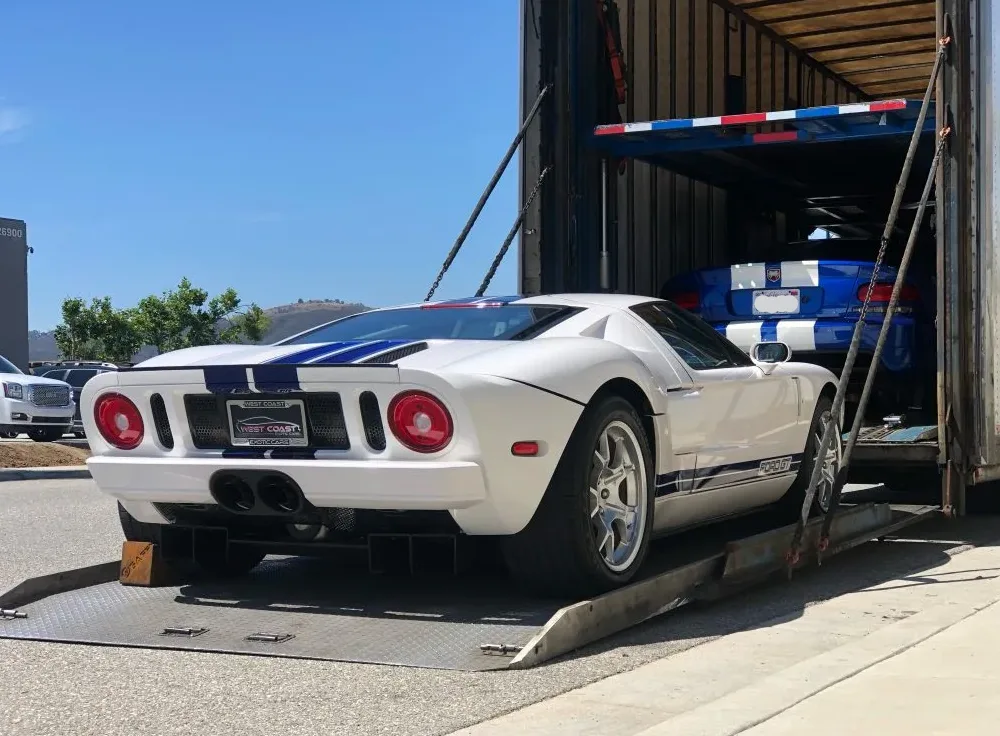
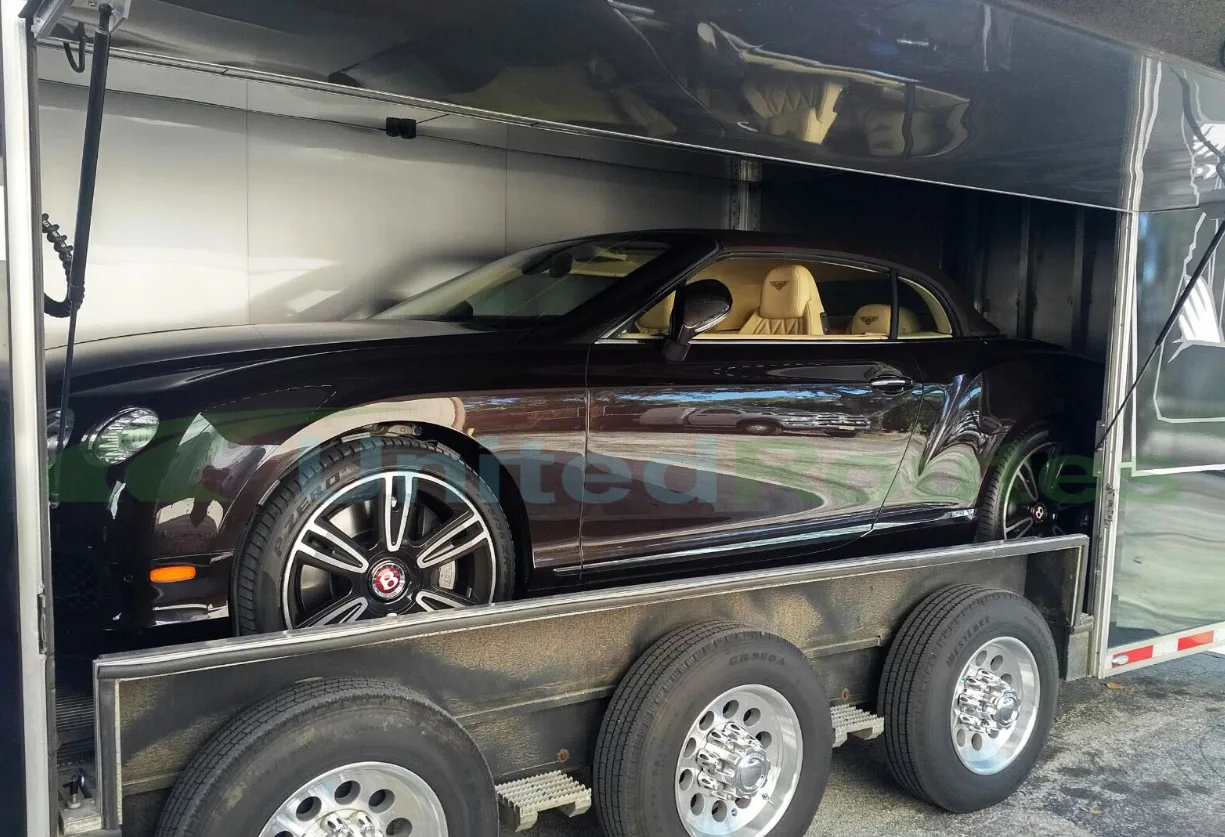
Enclosed transport adds $350-$600 and wraps the car in a fully sealed trailer. It makes sense for higher-end vehicles where a rock chip or road grime actually matters. If your student is driving a late-model BMW, Audi, or anything with a sticker price above $45,000, enclosed is worth considering.
How the Delivery Actually Works Near a College Campus
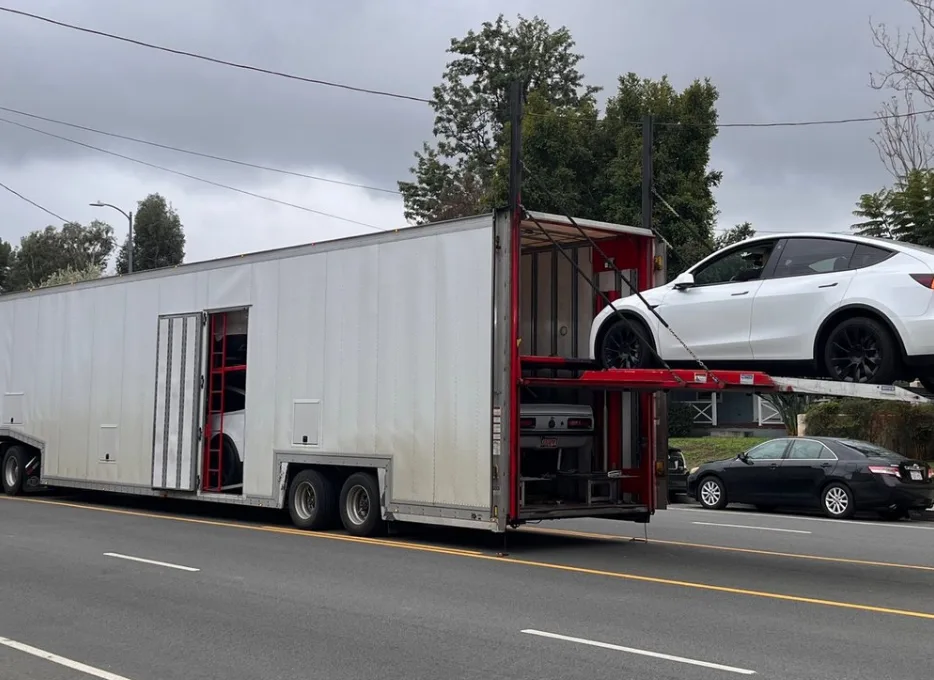
A loaded car hauler can't thread through one-lane campus roads lined with speed bumps and pedestrian crossings. That's just reality. Instead, your driver and student will agree on a nearby meeting point with enough space for the rig to park, unload, and pull out safely.
Here's the typical flow: the driver calls or texts your student 24-48 hours before arrival with a time window. They'll meet at a Walmart parking lot, a strip mall, or a wide commercial street within a couple miles of campus. Your student brings their photo ID, signs the Bill of Lading, does a quick walk-around, and drives off.
Certain schools have formal policies around this. Arizona State has specific zones where commercial carriers can stage. The University of Alabama asks for advance notification to campus police. Penn State's main campus in State College sits in a fairly rural area where meeting spots are limited, so planning ahead matters even more.
Brief your student on three things before delivery day: the carrier will give a 3-5 hour arrival window (not a specific time), they need a backup person who can accept delivery if something comes up, and they should scout the meeting spot in advance using Google Maps so they aren't wandering around lost while the driver burns daylight.
Paperwork Your Student Needs to Have on Delivery Day
Three things are non-negotiable at the delivery handoff: a government-issued photo ID (driver's license works), the vehicle's current registration, and proof of active auto insurance. Without all three, the driver can't release the car.
Here's where it gets tricky for families. If the car is registered in a parent's name rather than the student's name, you need to provide a signed release authorization letter. We deal with this mismatch on nearly half of all college shipments. Mom or Dad owns the Honda, the title is in their name, but the 19-year-old standing in a parking lot in Tuscaloosa is the one trying to take delivery. Without that letter, the driver can't legally hand over the keys.
Your student's insurance card also needs to list them as a covered driver, not just the vehicle. The carrier will glance at it to confirm before signing the final paperwork. A handful of carriers also ask for a student ID or proof of enrollment, although that's less common.
Snap photos of every document and text them to your student's phone the night before delivery. We field multiple calls per week from students who left their registration in a desk drawer back in the dorm while they're standing 10 feet from the truck. Having digital copies avoids that entirely.
Open vs. Enclosed: Which One Makes Sense for a College Car?
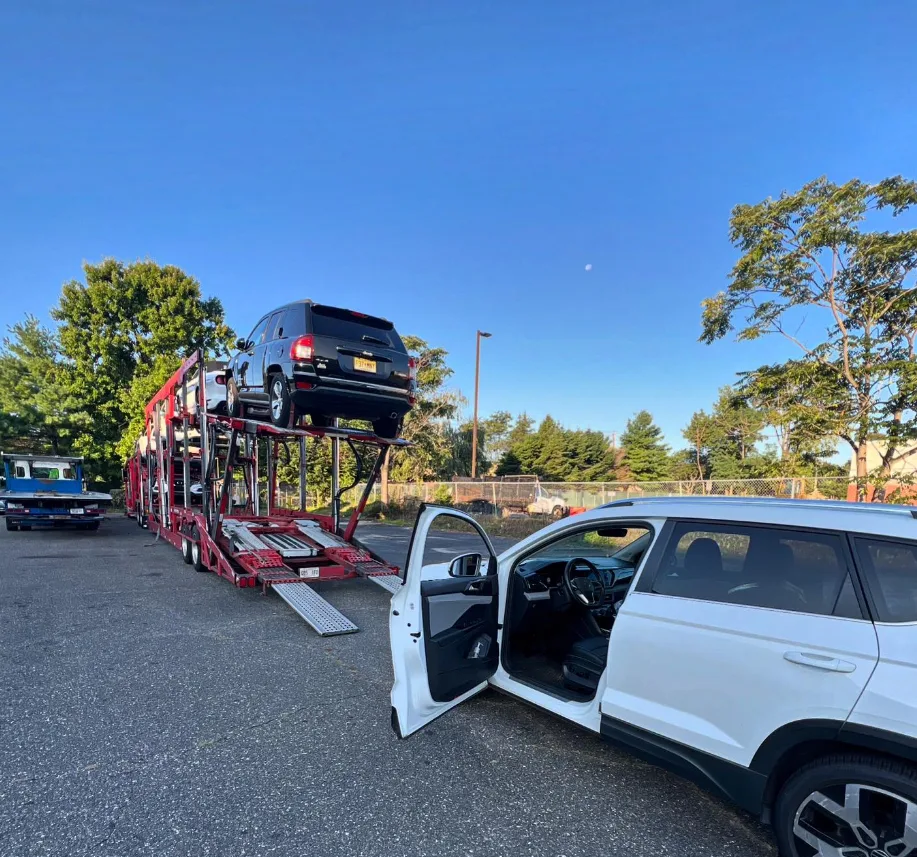
Open carriers move roughly 9 out of every 10 college cars we ship. They're multi-level trailers holding 8-10 vehicles, and they're the same rigs that Ford, Toyota, and Honda use to deliver brand-new cars to dealerships. The price is lower because the carrier splits operating costs across more vehicles per trip.
A 2019 Nissan Sentra, a Hyundai Tucson, a Chevy Equinox, any everyday car your student drives will be completely fine on an open hauler. The cars are strapped down with industrial-grade wheel ties and the damage rate on open transport is under 1% industry-wide.
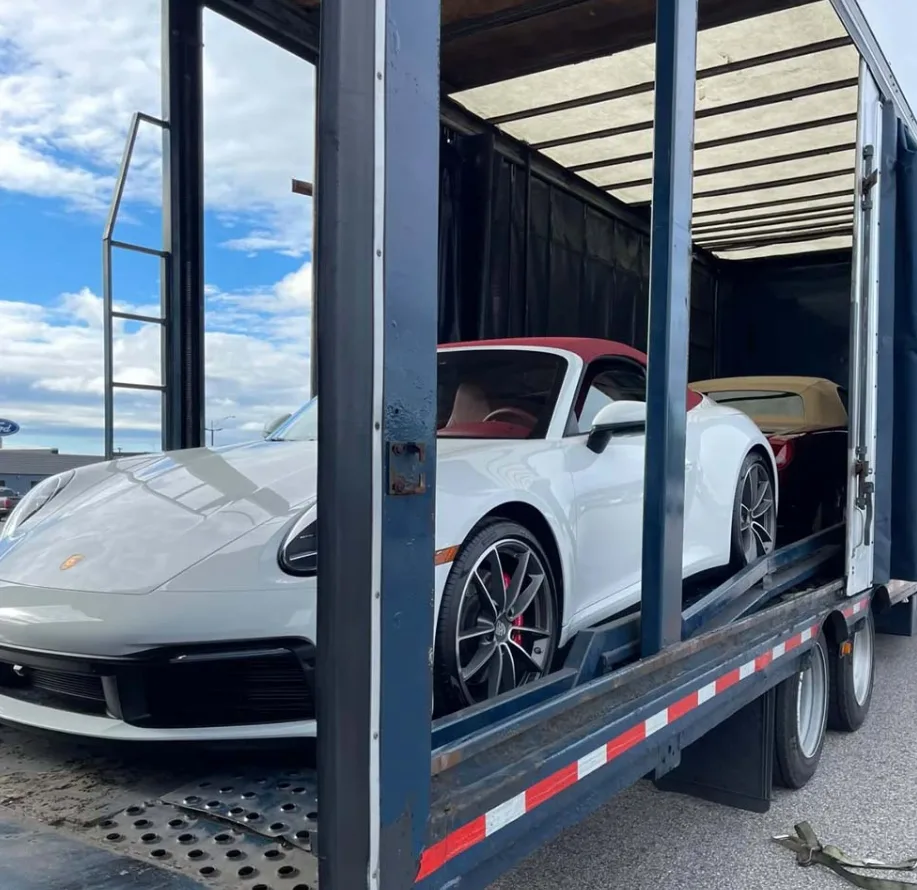
Enclosed carriers make financial sense when the vehicle itself is worth protecting at a premium: a late-model Mercedes C-Class, a BMW 3 Series, an Audi A4, or anything with a replacement value above $45,000. The added cost of $350-$650 buys a fully sealed trailer that blocks road debris, UV rays, and weather from touching the paint.
Be honest about the car your student is actually driving. If it already has parking lot dings and 60,000 miles on it, you don't need to wrap it in a sealed trailer. Put that $400 toward a campus parking pass instead.
How Long the Shipment Takes from Pickup to Campus
Long Distance Auto Transport timelines for college moves vary based on distance and how often carriers run that specific corridor. High-traffic routes between major metro areas and popular college towns move the fastest.
Southern California to Arizona State, the New York metro area to schools in Boston, and Florida to UGA are all routes that carriers drive constantly. Transit on those corridors runs 3-5 days because drivers fill up quickly and head out without waiting. The I-95 and I-10 corridors are especially efficient.
Uncommon routes take longer. Shipping a car from rural Vermont to the University of Alabama or from Montana to LSU might take 8-12 days. Carriers need a full or near-full load before departing, and it can take several days to piece together enough vehicles heading in the same direction.
Winter weather is the single biggest wildcard. Storms along I-80, I-70, and the northern stretches of I-90 can ground carriers for entire days. For any spring semester delivery in January, build in at least 3-4 extra days of buffer. We had ice storms across Texas and the mid-South in January 2024 that pushed back over a third of our scheduled college deliveries by 3-5 days.
Getting the Car Home After Graduation Without Overpaying
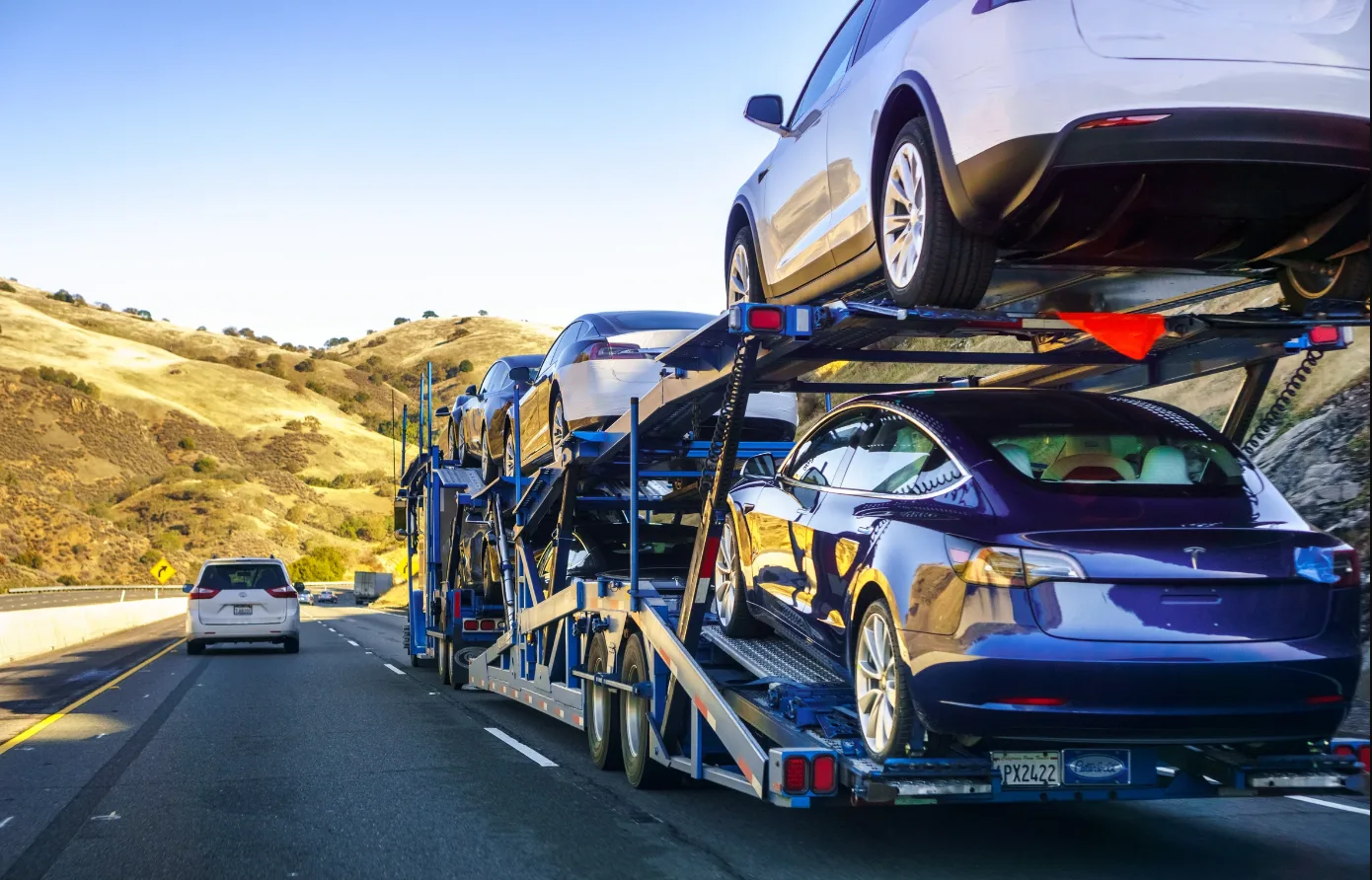
Commencement season from late April through mid-June is the third busiest stretch in auto transport (behind summer relocations and snowbird migration). Carrier availability tightens and rates climb, often matching August pricing. If your student is graduating, start the booking process in February or early March.
Parents who've shipped cars to and from college before already know this. They're the ones calling us in February to lock in a May pickup. First-timers tend to wait until finals week, then discover that every reputable carrier is fully booked and the remaining options cost 30% more.
If the distance is under 700 miles and your student is a confident highway driver, having them drive home might genuinely be the better call during peak graduation weeks. Gas and one night in a hotel will run $150-$250, while shipping during that same window might cost $750-$1,000 for the same route.
For longer hauls, or if your student is headed somewhere other than your home (a new job in another state, for example), book transport and build in date flexibility. A carrier that can pick up 2-3 days after commencement instead of the morning of will usually quote $100-$200 less because they have more room to fill a full load.
Open and Enclosed Transport for College Vehicles
| Factor | Open Transport | Enclosed Transport |
|---|---|---|
| Typical Cost | $550-$1,750 | $950-$2,350 |
| Weather Shielding | Exposed to rain, dust, UV | Fully sealed and covered |
| Recommended For | Everyday student cars under $45k | Premium, luxury, or collector cars |
| Average Transit | 3-9 days | 5-12 days |
| Carrier Supply | Widely available | Fewer rigs, book early |
| Cars Per Load | 8-10 vehicles | 2-6 vehicles |
Booking 6-8 weeks before an August or January move-in saves most families $250-$450 compared to calling the week before classes start. Carrier slots fill up fast, and last-minute expedited rates can nearly double the standard price.
What to Remember Before Booking
Common Questions About College Car Shipping
Answers from the National Auto Transport team based in Phoenix, AZ.