Shipping an Electric Vehicle: The Owner's Playbook
EV shipments through our Phoenix office have jumped 340% since 2021, and the number one problem we run into hasn't changed: battery charge level. About 4 out of every 10 EV owners show up with a full battery on pickup day, which most carriers will flat-out refuse to load. This guide covers everything from charge requirements to weight surcharges so your EV transport goes smoothly the first time.
Ship Your Car Today
Get a quote or talk to our team right now

Why EVs Cost a Bit More to Ship Than Gas Cars
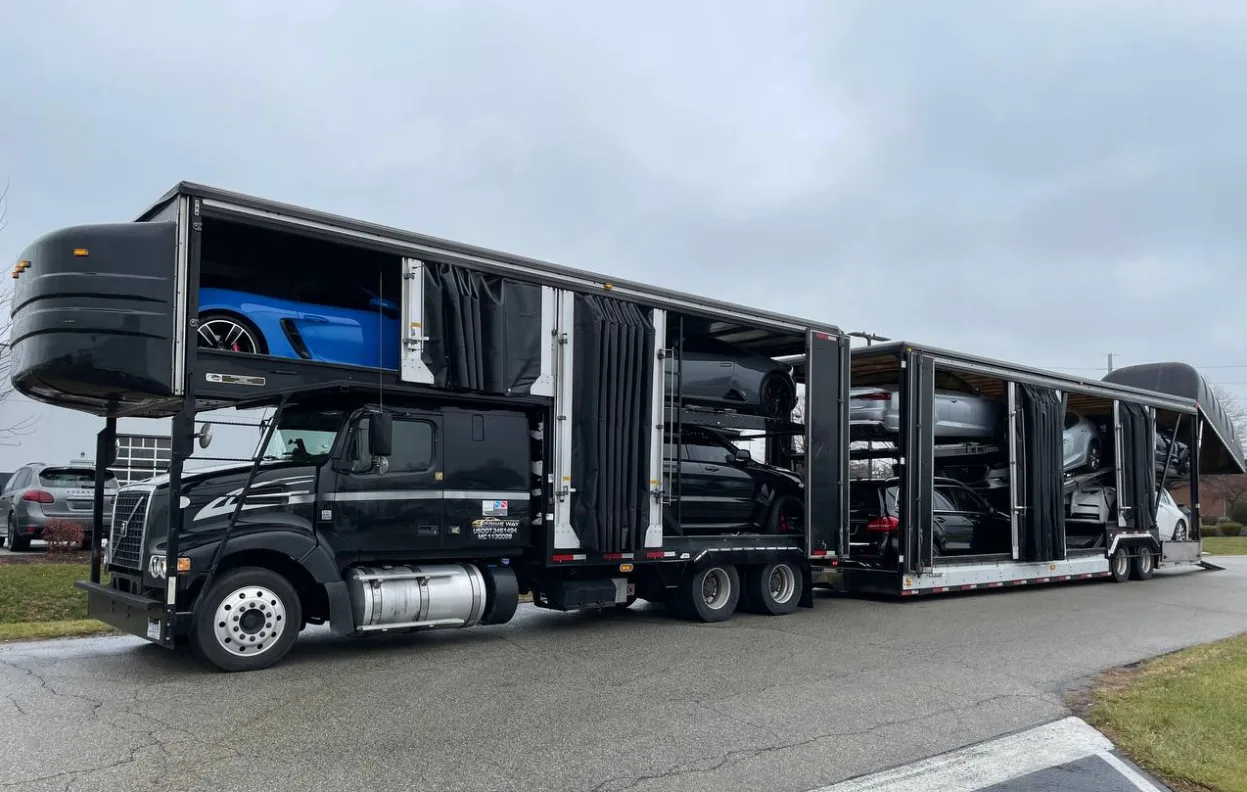
Expect to pay $75-$250 extra to ship an electric vehicle compared to a similar-sized gas car on the same route. That premium comes down to two things: weight and the smaller pool of carriers willing to haul EVs.
Battery packs are heavy. A Tesla Model Y tips the scales at 4,398 pounds, while a Toyota RAV4 with a gas engine weighs around 3,615 pounds. That's nearly 800 extra pounds the carrier's truck has to haul, which burns more diesel and takes up a bigger slice of the trailer's weight capacity. Multiply that across 8-10 vehicles on an open rig and the math adds up fast.
On a practical level, shipping a Honda Accord from Phoenix to Chicago runs about $750 on open transport. A Model 3 on the same lane costs roughly $825-$875. The gap widens slightly on cross-country routes: a gas sedan runs $950-$1,200 coast-to-coast while a standard EV lands at $1,050-$1,400. For enclosed auto transport, the difference narrows because you're already paying a premium for the service itself.
High-end EVs like the Mercedes EQS or Porsche Taycan Turbo S fall into enclosed pricing regardless of powertrain. Those shipments run $1,400-$3,000 cross-country, and at that level the EV surcharge is almost invisible compared to the base cost of white-glove handling.
The Battery Charge Window Every EV Owner Needs to Hit
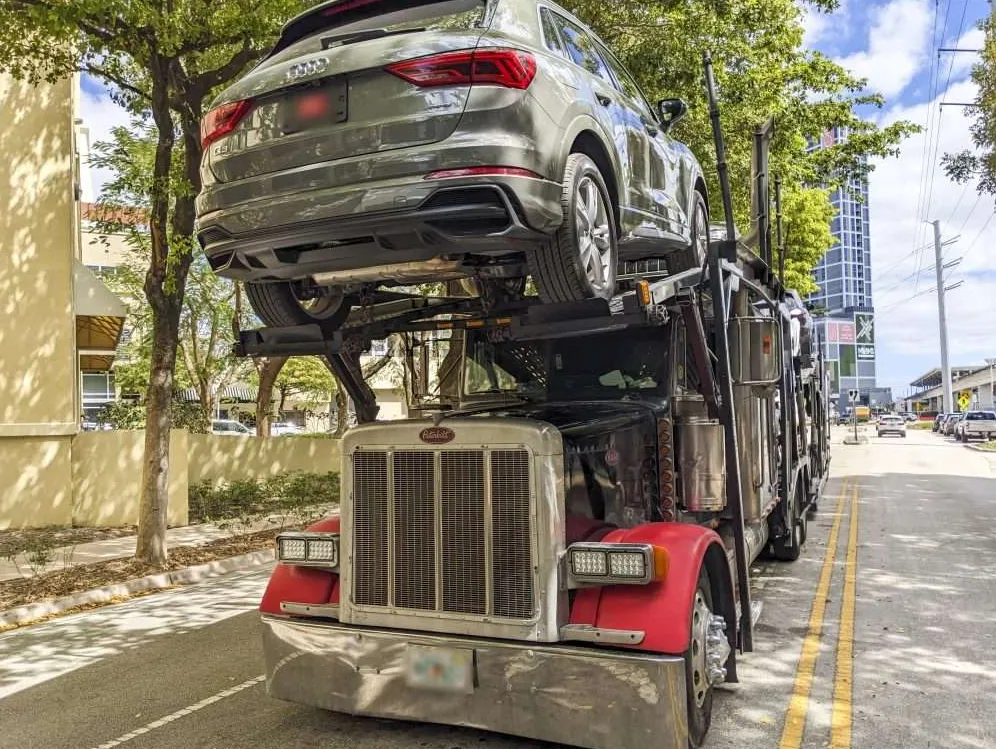
Carriers want your battery sitting between 25% and 50% on pickup day. That's the industry-standard range, and most professional haulers will turn your car away if you show up at 80% or higher. The concern is thermal management: lithium-ion packs generate more heat at high charge states, and sitting on a trailer in direct sun for a week amplifies that risk.
The ideal target is 30-40%. That gives the driver plenty of power to drive your car onto the ramp, reposition it on the trailer, and unload at the destination without worrying about running out of juice. It also leaves a comfortable buffer below the thermal risk zone that keeps everyone on the safe side.
Going too low creates its own headache. If your battery drops below 15-20%, the car may not have enough power to engage drive mode during loading. We had a customer in Miami last year whose Rivian R1S showed 8% at pickup. The carrier couldn't load it, the owner had to find a Level 3 charger, and the whole pickup got pushed back a day. That's a $150-$200 lesson you don't need to learn firsthand.
Plan your last charge session 24-48 hours before the scheduled pickup window. Charge to about 35%, then let the car sit. Background systems like cabin overheat protection and connectivity modules will nibble away 1-3% over a couple days, landing you right in that sweet spot when the truck arrives.
Step-by-Step: Prepping Your EV for the Carrier
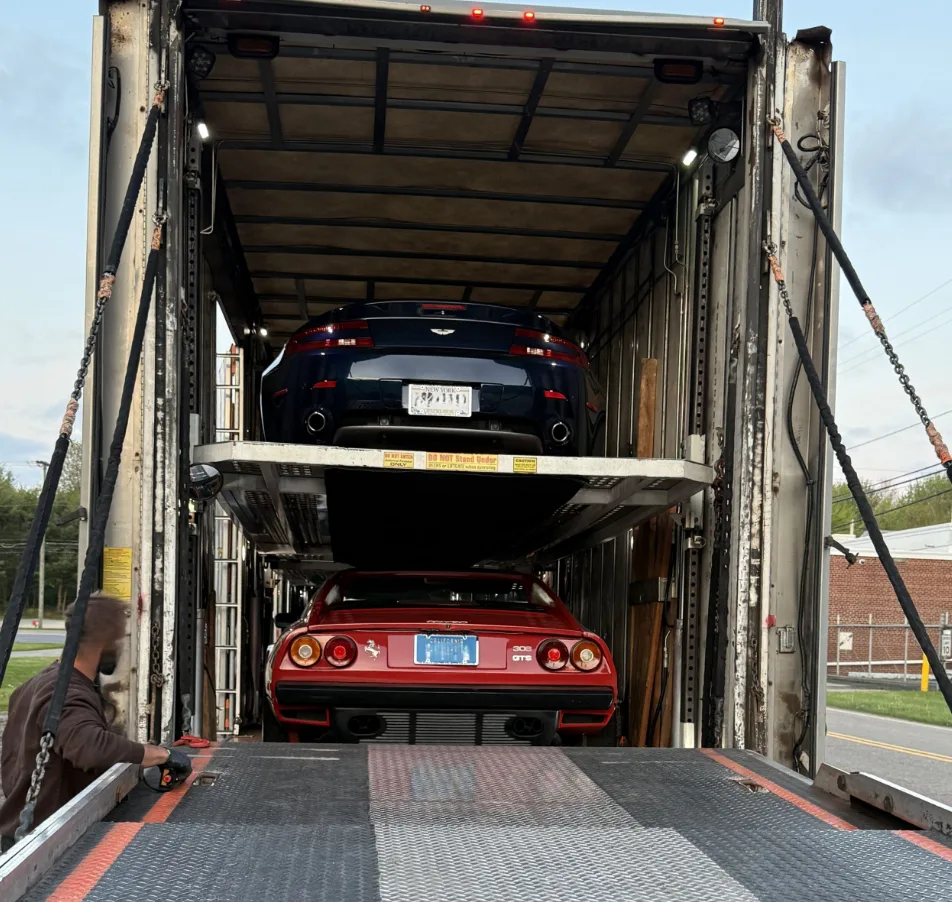
Start two days before your pickup window. Charge to 30-40%, clear out all personal items (phone mounts, center console clutter, trunk bags), and give the exterior a thorough wash. Then photograph every panel, bumper corner, and wheel from multiple angles with timestamps. The prep process for an EV is nearly identical to a gas car, with a few battery-specific additions that make a real difference.
Turn off every power-hungry feature your car has. On a Tesla, that means Sentry Mode, Cabin Overheat Protection, Summon Standby, and any third-party apps that keep the car awake. Sentry Mode alone can eat 5-8% of your battery per day. Over a 10-day cross-country haul, that's 50-80% of your charge gone just from surveillance cameras running on a parked trailer.
Wash the car inside and out so the driver can spot and document every existing blemish during the Bill of Lading walk-around. A dirty car hides scratches, and hidden scratches turn into disputed claims later. Spend the 20 minutes. It's worth it.
One thing that catches EV owners off guard: key fob battery life. EV fobs drain faster than traditional ones because they're constantly communicating with the car's Bluetooth system. Leave one fob in the glove box (with a note taped to the steering wheel telling the driver where it is) and keep the other with you. If the fob inside the car dies mid-transit, the driver can't move your vehicle at delivery.
Picking the Right Carrier Type for Your EV
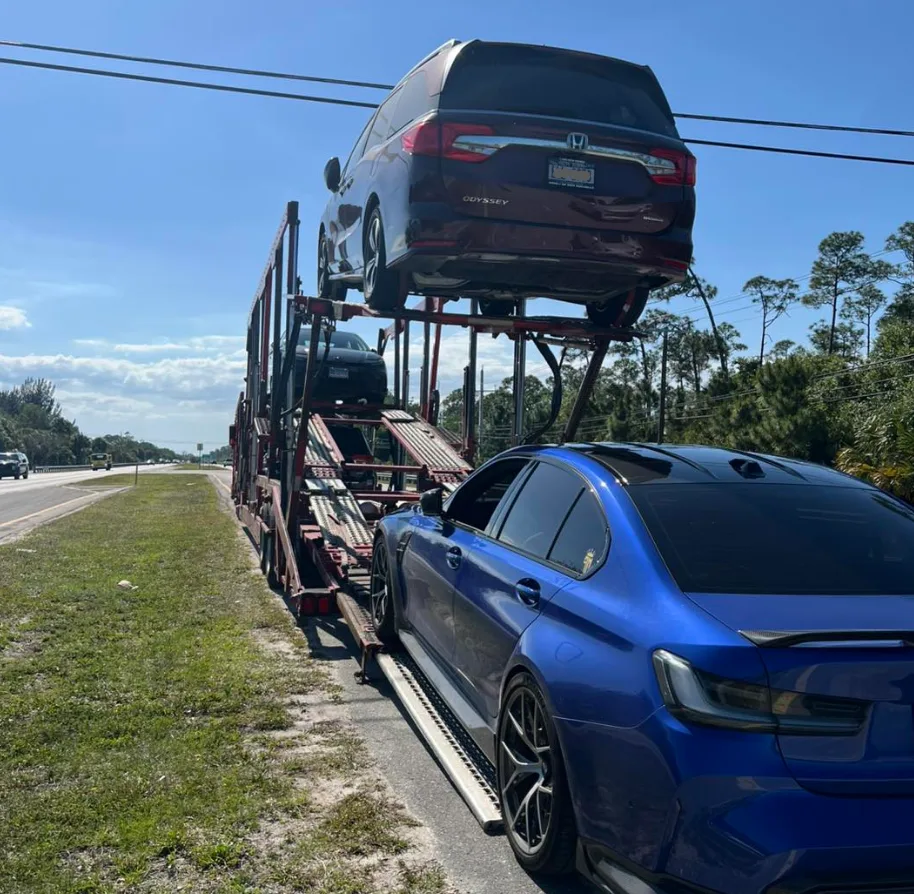
Open transport handles the vast majority of EV shipments without any issues. If you're moving a Model 3, a Chevy Equinox EV, a Hyundai Ioniq 5, or any EV valued under $65,000, open is the practical and cost-effective choice. These cars sit on the same multi-deck trailers used to deliver brand-new vehicles from the factory to your local dealership.
Enclosed becomes the better call when you're shipping something like a Lucid Air Grand Touring, a Porsche Taycan Turbo, or a Rivian with a custom wrap. If the vehicle is worth north of $80,000 or if the finish is irreplaceable, the added protection from road debris, salt spray, and weather justifies the 60-80% price bump.
Weight is the factor that trips people up most with EVs. A Ford F-150 Lightning checks in at 6,500 pounds, and a GMC Hummer EV tops 9,000. Not every open carrier rig can accommodate vehicles that heavy, especially if the truck is already partially loaded. We screen our carrier partners for weight capacity before dispatch to make sure your EV gets matched with the right equipment from the start.
If you're in a rush, know that expedited car shipping for EVs works a bit differently than for gas vehicles. Expedited runs sometimes involve mid-route carrier swaps, and every swap means another battery check and reload. That adds coordination time. We generally recommend standard scheduling for EVs unless your deadline is truly non-negotiable, because the 40-60% rush premium doesn't always buy as much time savings as it does with a gas car.
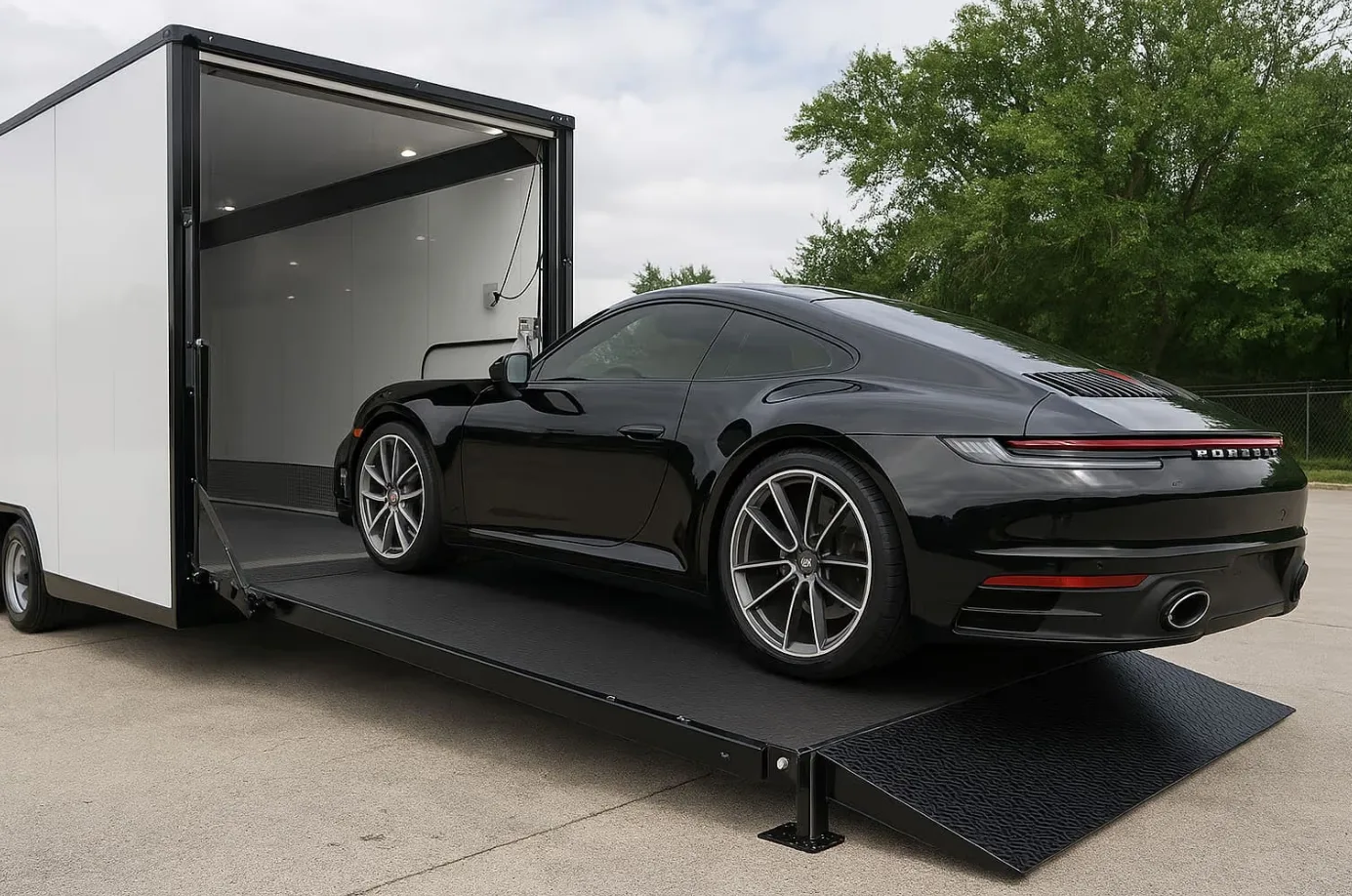
The 4 Most Common EV Shipping Problems (and How to Dodge Them)
Unexpected battery drain tops the list. Even after you've turned off Sentry Mode and every other power-hungry feature, background systems like cellular connectivity, battery thermal management, and 12V accessory draw can nibble away 10-20% of your charge over a 7-14 day journey. That's normal, but if you started at 25%, you might arrive below the threshold needed to shift into drive at delivery.
Driver inexperience with EVs is the second biggest headache. Some carrier drivers have never operated regenerative braking, one-pedal driving mode, or a frunk release before. That confusion slows down pickup and delivery, sometimes by 30-45 minutes. We solve this by noting your EV's make and model at booking so the dispatcher can assign a driver who's handled that platform before.
Rural delivery locations with no nearby charging infrastructure create a logistical wrinkle. If your EV arrives at 8% battery in a small town 40 miles from the nearest DC fast charger, the driver can't exactly top it off for you. In those situations, the carrier may need to deliver to the closest charging station instead of your driveway. Mentioning your delivery area's charging situation when you book lets us plan around that.
Lastly, insurance claims on EVs tend to be more complex than on gas cars. A fender-bender that costs $2,000 to fix on a Camry can balloon to $12,000-$18,000 on a Model Y if the battery tray or cooling lines are compromised. That's exactly why we carry $250,000 per-vehicle coverage and why we recommend EV owners request a copy of the carrier's insurance certificate before pickup day.
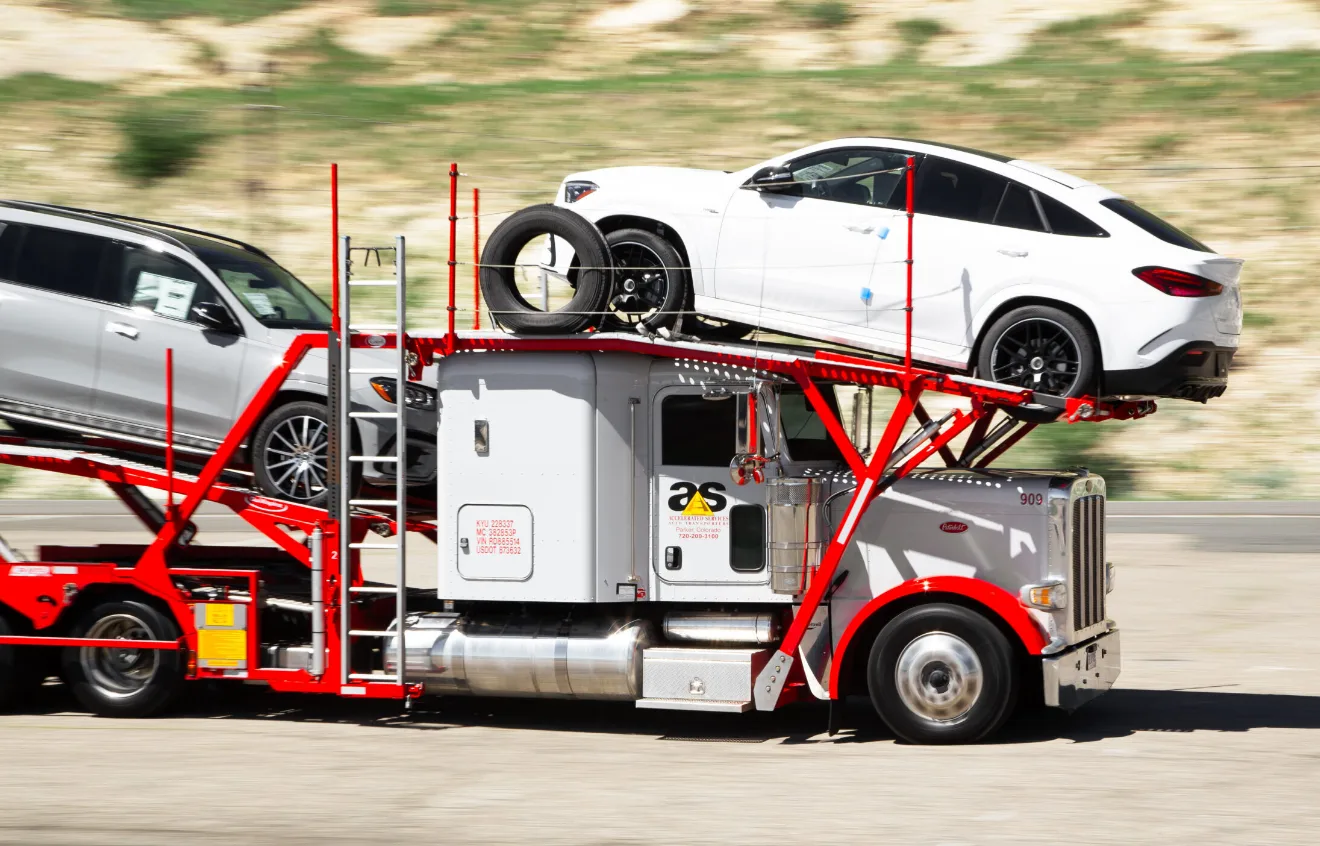
2026 EV Shipping Costs From Our Actual Quotes
Here are numbers straight from our dispatch records. A Tesla Model 3 from Phoenix to New York on open transport: $1,150-$1,350. That same car in an enclosed trailer: $2,000-$2,400. For comparison, a gas-powered Honda Civic on the identical route runs about $1,000-$1,200 open. The EV premium on that particular lane is roughly $100-$150.
Shorter regional moves shrink the gap. We shipped a Chevy Bolt EUV from Dallas to Atlanta last month for $580, only $60 more than a comparable Chevy Malibu. On hauls under 800 miles, the weight surcharge is minimal because the carrier's fuel burn difference is small.
Luxury EVs fall into their own pricing tier that has less to do with the battery pack and more to do with the vehicle's value. Shipping a Porsche Taycan GTS costs about the same as shipping a Porsche 911 Carrera: $1,900-$3,200 cross-country enclosed. Both require soft-tie straps, enclosed walls, and drivers experienced with six-figure cars.
The factor that pushes EV pricing higher during peak season is carrier availability. Only about 55-65% of the trucks in our network actively accept electric vehicles, so when demand spikes in June through August, there's less competition for your load. Booking 2-3 weeks early during summer is the simplest way to keep costs down.
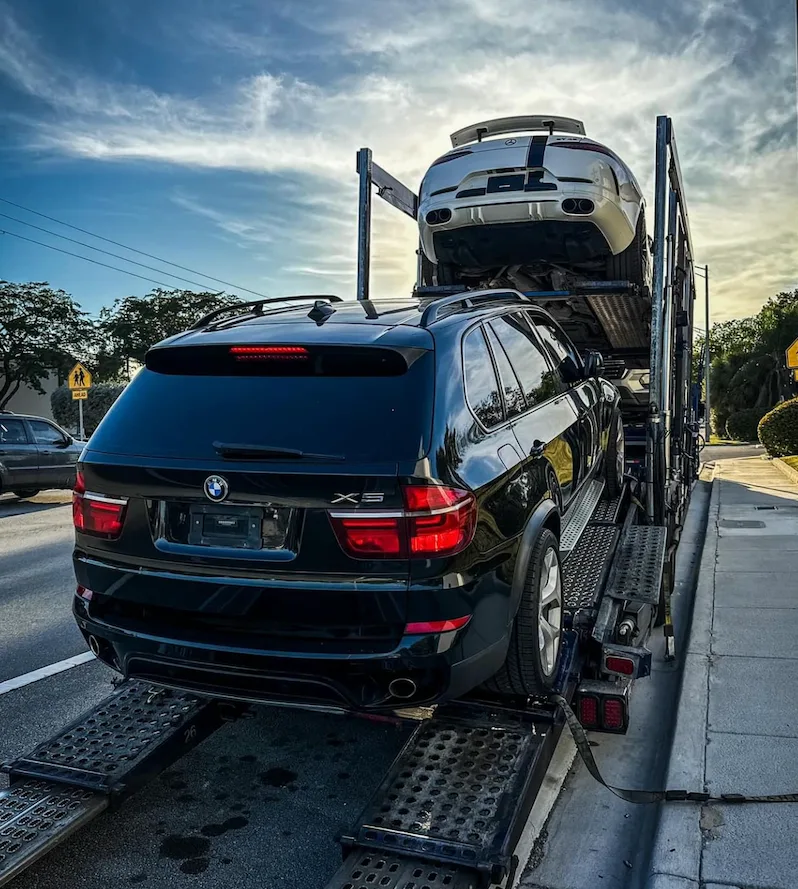
What Happens When Your EV Arrives
EV deliveries take a little longer than gas car drop-offs because there's more to check. Budget 20-30 extra minutes compared to a standard vehicle. The driver will unload your car, and then you'll both do a full walk-around inspection just like at pickup. Don't feel rushed by the driver. This is your one window to document anything that looks different from when your car left.
Start with the body: check every panel, bumper, wheel, and glass surface against your pickup photos. Then move to the EV-specific items. Open the charge port and look for cracks or scuffs. Test the door handles (Tesla's flush handles are especially prone to getting dinged). Power up the infotainment screen and make sure it responds normally. Turn on the lights and verify every function works.
Within 24 hours of receiving your car, plug it in and run a full charge cycle. Charging port damage or disrupted battery connections can happen during loading and unloading but won't show up on a visual inspection. If the car throws a charging error or charges at a noticeably slower rate than normal, that's a sign something shifted during transport. Report it to our team immediately so we can start a claim while the evidence is fresh.
Review your delivery paperwork before you sign off. EV transport contracts often include battery charge-level notations at both pickup and delivery. Make sure the recorded charge at delivery matches what your dashboard shows. If there's a significant discrepancy, note it on the BOL before the driver leaves. That small detail can matter a lot if a claim comes up later.
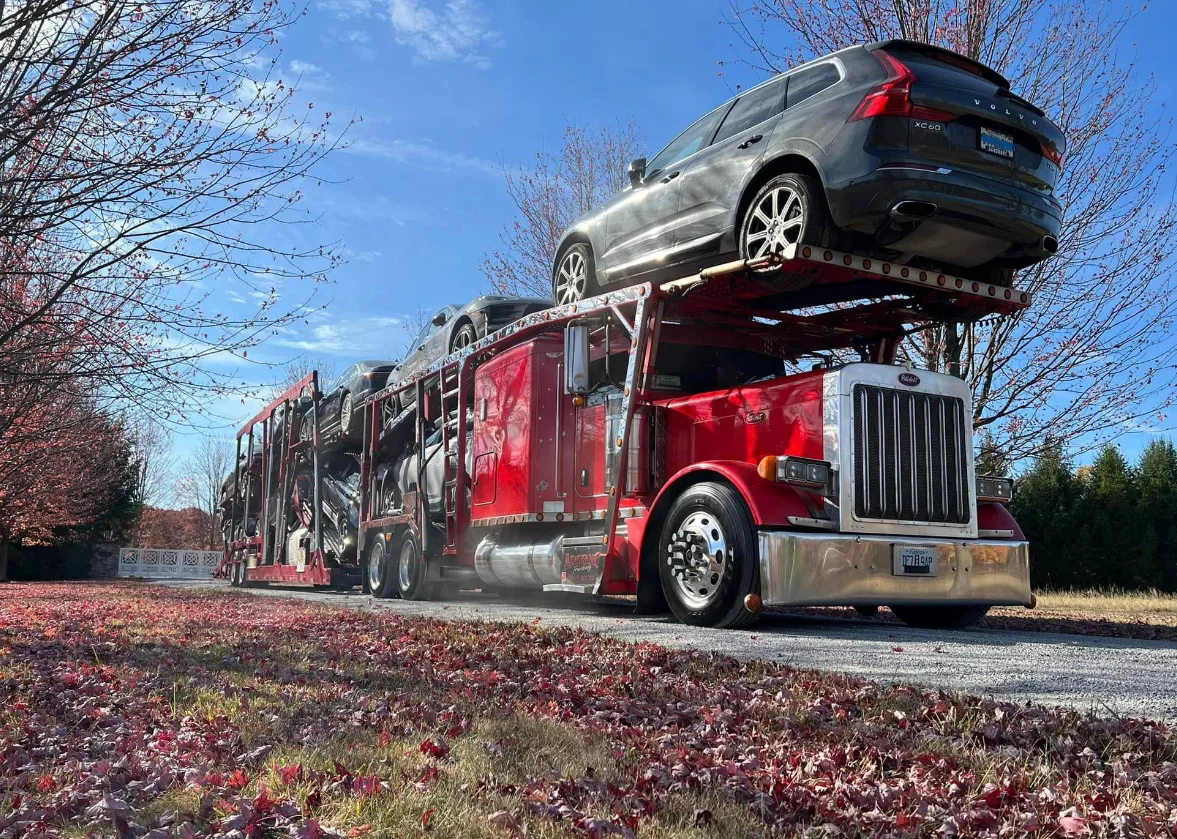
How to Pick a Transport Company That Actually Knows EVs
Start where you'd start with any auto transporter: verify their USDOT and MC numbers on FMCSA.dot.gov. That's table stakes. The next question to ask is how many EVs they've shipped in the last 12 months. A company that's moved 50 Teslas is in a different league than one that's done 3. We shipped over 4,200 electric vehicles last year from our Phoenix office alone, so this is a core part of what we do.
Insurance limits matter more with EVs than with any other vehicle category. A battery pack replacement on a Model Y runs $13,000-$16,000. On a Rivian R1T, you're looking at $20,000+. Standard $100,000-per-vehicle coverage barely scratches the surface if there's a serious incident. We carry $250,000 per vehicle specifically because EV repair bills can escalate so quickly.
The size and quality of a broker's carrier network directly affects how fast your EV gets picked up and who's driving the truck. We partner with over 15,000 licensed carriers, and roughly 9,000 of those have confirmed EV handling experience. That depth means we can find a driver who's actually loaded your specific make and model before, not someone figuring out how to disengage your parking brake for the first time.
Here's a test that separates the pros from the amateurs: does the company ask you about your battery charge level during the booking call? If they don't bring it up, they don't have an EV-specific process. A professional EV shipper will walk you through charge targets, feature shutoff steps, and key fob placement before you even get off the phone. That conversation is a good sign that the rest of the shipment will be handled correctly.
EV Shipping Costs vs Gas Vehicles (2026 Averages)
| Vehicle | 1,000 Mi (Open) | Coast-to-Coast (Open) | Coast-to-Coast (Enclosed) |
|---|---|---|---|
| Gas Sedan (Honda Accord) | $550-$750 | $950-$1,200 | $1,500-$2,100 |
| Mid-Range EV (Tesla Model Y) | $625-$850 | $1,050-$1,400 | $1,700-$2,400 |
| Luxury EV (Porsche Taycan) | $775-$975 | $1,300-$1,900 | $2,300-$3,200 |
| Heavy EV (Ford F-150 Lightning) | $725-$925 | $1,150-$1,650 | $2,000-$2,900 |
Charge to 30-40% and shut off every background feature before the carrier arrives. That single step prevents the two most common EV shipping delays: pickup refusal for high charge levels and dead batteries at delivery from Sentry Mode and cabin protection draining power for days on end.
What Every EV Owner Should Remember
Electric Vehicle Shipping FAQ
Real answers from our Phoenix dispatch team on the EV-specific questions we hear daily.